


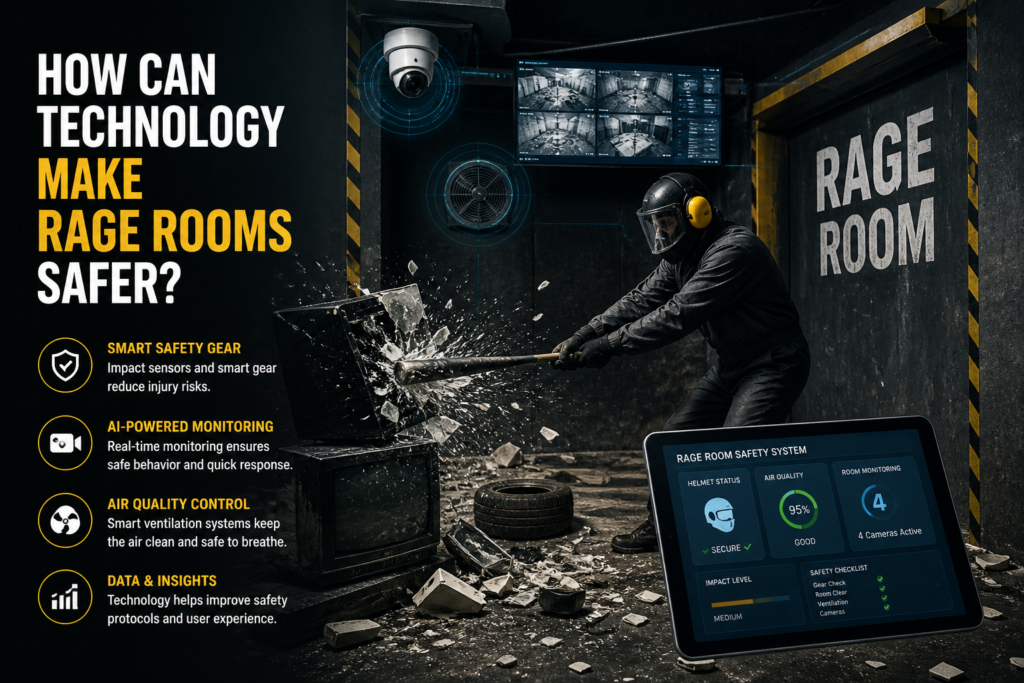
Rage rooms have moved from niche novelty to go-to stress relief in a massively growing market, popping up in cities and industrial estates alike. The concept is easy: You walk in, suit up, and let off steam in a controlled burst of chaos. But that mix of thrill and catharsis only works when people feel protected.
Are rage rooms safe?
Early rage rooms leaned heavily on common-sense precautions. You’d be handed thick gloves, a helmet with a visor, maybe a padded vest, then guided through a short safety briefing before stepping into a debris-filled zone. Staff kept an eye on things from nearby, stepping in if someone pushed past basic rules. It worked, but it had limits. As demand grew, so did expectations: Is the environment as safe as it is exciting?
So, the setups got amended. Reinforced walls, better ventilation, and clearly marked smash zones became the norm. Booking systems improved too, as did insurance requirements and local regulations, to encourage more structured procedures. At the same time, social media added pressure; after all, no one wants a viral clip of unsafe conditions.
Which technology can be integrated?
Tech now fills the gaps that manual oversight can miss. Modern rage rooms use camera systems not just for security, but for real-time monitoring. Staff can track movement patterns, spot unsafe behavior quickly, and communicate with guests through intercoms without breaking the flow. Some venues layer in automated systems that control lighting, lock doors during active sessions, and even pause activity if something unexpected happens.
Sensors play a growing role as well. Motion tracking or setups with proximity sensors can flag when someone steps outside a designated area, while environmental sensors monitor air quality as dust and particles build up. These systems give staff an extra set of eyes, but are as always most effective when paired with solid training, so employees know how to interpret alerts and respond quickly.
What experience can guests expect?
Check-in feels more structured, and inside the room, everything has its place. Breakable items are staged, flooring is designed to handle debris, and visibility is better than it used to be, so you’re not swinging blindly through dust or dim light. That’s a sense of control that makes it easier to relax.
Pay attention to how the space is run. Good venues keep group sizes sensible and separate guests when needed, especially if energy levels start to spike. Staff don’t hover, but they’re never far away either. You might hear their voice over an intercom if something needs adjusting, or see a subtle pause in the session if the system flags an issue.
You can do your part, too. Wear the gear properly, no shortcuts. Keep an eye on your footing, especially as debris builds up. If you’re sharing the room, stay aware of where others are moving. The more you respect the setup, the more freedom you get to enjoy it.
How does a smart design help?
The newest tech gets attention, but the layout of the room does just as much heavy lifting. Entry points are often staggered, so groups don’t collide, and exit routes are kept clear and obvious. Even the positioning of objects is deliberate, guiding your energy toward safe zones and away from walls or structural features. Materials have evolved as well. Surfaces are built to absorb impact without splintering dangerously, and barriers are tougher without feeling industrial. Ventilation systems clear out dust quickly between sessions, which keeps visibility high and reduces irritation.
Rage rooms aren’t slowing down, and neither is the push to make them safer without dialing back the thrill. The next wave will feel even more seamless, with tech and design blending into the background until you barely notice them. That’s the sweet spot: an experience that feels wild on the surface, with a carefully engineered safety net underneath. It’s worth choosing venues that invest in that balance—you’ll feel the difference the moment things start to smash.